United States of Scare: The Witching Tree of Smithfield
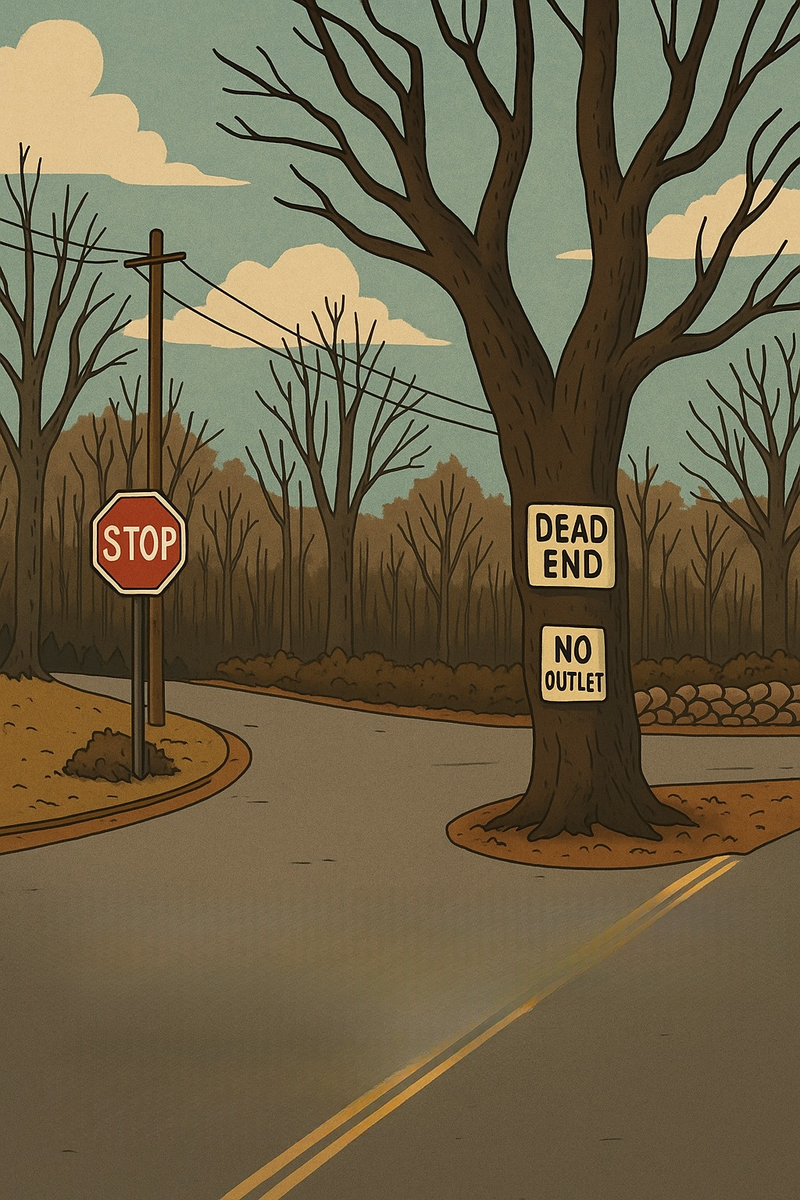
In Smithfield, Rhode Island, the legend was never just a story.
For decades, a dead oak stood in the middle of a three-way intersection like a warning nobody could translate. The road curved and twisted toward it, dark at night, the tree appearing suddenly in headlights like a figure stepping into your path. Its trunk was scarred with the memory of impact — metal, glass, paint — the marks of cars that found it too late.
Some crashes were minor.
Some were not.
And with every accident, the legend fed itself.
Locals said a witch was buried beneath the roots.
They said the tree wasn’t left standing because the town forgot it. They said it was left because it refused to fall. Attempts to remove it failed. Equipment broke. Workers hesitated. The oak stood in the center of the road year after year, absorbing collisions, growing darker in reputation with every whisper.
Two explanations followed every wreck.
The first was simple: the road was winding and poorly lit. Drivers came too fast. The tree appeared too suddenly.
The second explanation never sounded simple.
People were circling it.
Teenagers and thrill-seekers treated the intersection like a ritual site. Three loops around the tree. That was the rule. After the third pass, the witch was supposed to appear. Some versions claimed she chased you only a short distance. Others insisted she followed you up the road, bursting from an old house that sat watching the intersection like a blind eye. One telling said if you threw rocks at the house, she would come screaming into the street.
In reality, the rocks summoned an elderly homeowner who had no patience for folklore. But legends don’t die easily. They adapt. Soon there were stories of a phantom biker roaring from the tree and tailgating cars into the woods. Of ghost children playing in the road who vanished just as headlights hit them. Of drivers swerving to avoid figures that were never there — and finding the oak instead.
And yet, people kept coming.
Police were called again and again. Officers found cars circling the tree at midnight, engines idling, young faces daring the dark to answer. They found shattered bottles, tire tracks, and the uneasy silence that follows people waiting for something to happen. The house up the street endured its share of harassment, blamed by proximity for a curse it did not create.
Through it all, the oak remained.
Then, finally, the town brought it down. The tree that had anchored the legend for generations was cut away. The old house burned not long after, its connection to the story sealed in ash. A new tree was planted in its place, surrounded by guardrails and bright paint — modern lines drawn to tame an old crossroads.
Since then, the accidents have slowed.
Officials credit better engineering. Safer traffic design. Clearer visibility.
But ask the older residents, and some will tell you the intersection feels… lighter now. Quieter. As if a pressure lifted when the oak fell. As if something bound to the roots lost its anchor when the wood hit the ground.
Legends don’t disappear when their landmarks do.
They wait.
And if you drive through that intersection late at night, when the road is empty and the air feels thick in your headlights, you might understand why some people still refuse to circle the new tree.
Just in case.