Prentice Pendleton: Little Rhody's Legendary Blood Sucker!
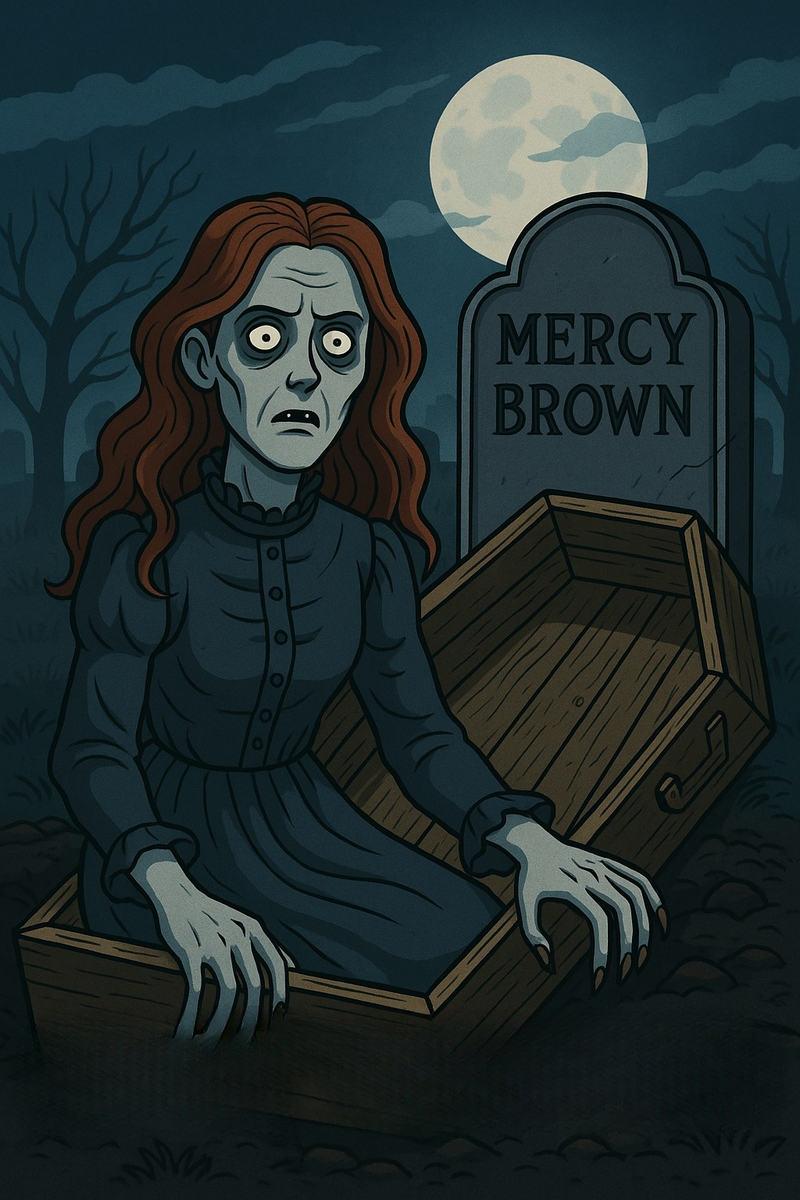
Some legends are born from monsters.
Others are born when grief needs something to blame.
Mercy Brown became a legend only after she was dead.
In the winter of 1892, sickness hollowed out her family one life at a time. The disease was called consumption — a slow thief that stole breath, color, and strength until nothing remained. Today we call it tuberculosis. Back then, it had no cure, no mercy, and no explanation anyone trusted. In small New England towns, death did not feel random. It felt intentional.
And when tragedy repeats, people begin to look for a hand guiding it.
The Browns buried Mercy in frozen ground. The earth locked her away in ice. But the dying did not stop. Her brother wasted away next, coughing up blood while neighbors whispered that something unnatural clung to the family. New England was deep inside a vampire panic, a fever of superstition that spread faster than the illness itself. People believed the dead could linger. That they could feed.
And they believed Mercy was feeding on her own blood.
So they opened her grave.
What they found shattered whatever reason remained. Mercy’s body had not decayed as expected. Her skin was intact. Her features recognizable. To terrified eyes, she did not look buried — she looked paused.
A doctor tried to explain the preservation. The ground had been frozen. Cold can slow decay. Nature had done nothing unusual.
No one listened.
Fear had already decided the truth.
They burned her heart. They burned her remains. In a ritual meant to save the living, they mixed her ashes into a liquid and forced her dying brother to drink it — a desperate act born from the belief that the dead must be destroyed to free the living.
It changed nothing.
The sickness continued. The grief continued. And Mercy Brown’s name did not fade with her.
It grew.
Generations passed, but the grave never rested quietly. Visitors to the cemetery began reporting voices drifting through the trees when no one was there. Pale lights dancing above the stones. Footsteps circling Mercy’s marker long after the gates were locked. Some swore the air around her grave felt heavier, colder — like the earth itself remembered the violence done there.
They call her Little Rhody’s vampire now.
Tourists come searching for a thrill. Ghost hunters bring cameras and recorders. They speak her name out loud, daring history to answer. And sometimes, they claim, something does.
Whether Mercy Brown was a victim of disease, fear, or something that refuses to stay buried depends on who you ask.
But in that cemetery, when the fog rolls low and the wind carries whispers you cannot trace…
most visitors stop talking.
Because the grave does not feel empty.
And legends born from injustice rarely stay quiet forever.