Prentice Pendleton and the Ghost Ship: The Dead Ship of Harpswell
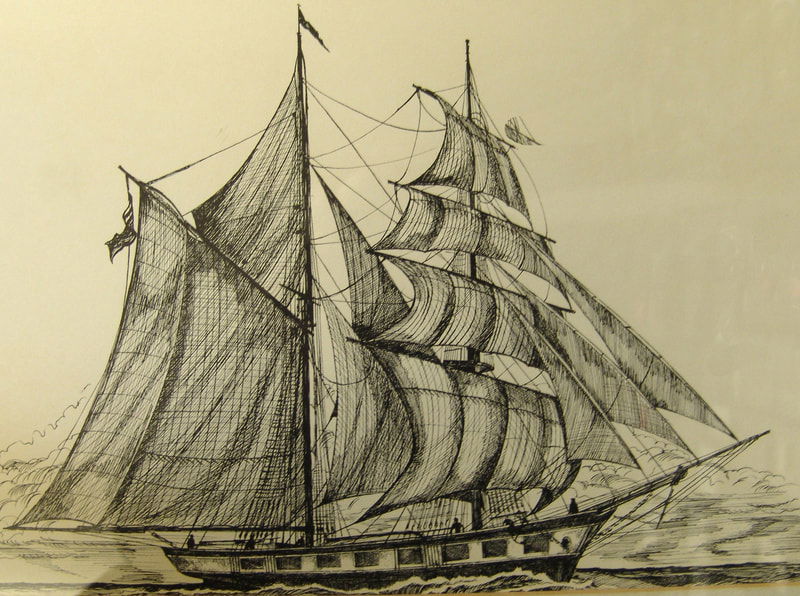
In the early 1800s, the United States was still a very young country — brave on land, but weak at sea. America barely had a navy. Across the ocean, the British Royal Navy ruled the world’s waters like an iron giant. Their ships were everywhere.
And they needed sailors.
During the long and brutal wars against Napoleon, Britain began stopping American merchant ships in the open ocean. They boarded them by force. They took cargo. And worst of all, they stole men. American sailors were dragged from their own decks and forced into British service. The practice had a name that chilled every harbor town:
Impressment.
Within a few short years, the Royal Navy exploded in size. Tens of thousands of men filled its ranks — many of them taken against their will. The United States was furious. Presidents Jefferson and Madison protested, but America did not yet have the power to challenge Britain ship for ship.
So the young nation turned to a different weapon.
Privateers.
Privateers were fast civilian ships given permission to hunt enemy vessels. They weren’t giant warships. They were lean, quick, and clever — captained by sailors who relied on speed and daring more than brute strength. They struck fast, captured British ships, and vanished before the enemy could respond.
One of the most feared privateers was a schooner called The Dash.
Built in Maine and commanded by Captain John Porter, The Dash was famous for her speed and tricks. Some of her cannons were fake — carved from wood — but from a distance they looked real enough to scare her enemies. She darted across the ocean like a knife, capturing fourteen British ships and earning a bounty on her head.
The British wanted her destroyed.
In January 1815, The Dash sailed out of Freeport, Maine, alongside another vessel. Sailors noticed the date and frowned. It was a Friday — a day many believed unlucky at sea. A storm was brewing offshore. The second ship turned back.
The Dash did not.
She sailed straight into the darkness and vanished.
Days passed. Then weeks. No wreckage. No survivors. The ocean gave nothing back.
But the sightings began.
Fishermen swore they saw a schooner racing through the fog with no wind in her sails. The name Dash glowed faintly on the bow. The ship made no sound. It didn’t cut the waves — it seemed to glide above them. And no one stood on deck.
A legend spread along the coast. When a family member of the crew died, people claimed the ghost ship returned to carry their spirit away. Most dismissed the stories as sailor superstition. The sea, after all, is full of tall tales.
Until World War II.
German submarines had been spotted near American waters, and Allied ships patrolled the coast day and night. In Casco Bay, Maine, radar operators detected a mysterious contact. Alarms sounded. Guns turned. Through thick fog, British sailors opened fire.
What emerged from the mist was not a submarine.
It was a schooner.
Witnesses later swore they saw the name on her bow:
Dash.
Shells tore through the fog — and passed straight through the ship. When the smoke cleared, nothing remained.
The official report called it battlefield confusion. Stress. Imagination. The fog of war.
But that same morning, a couple picnicking on the cliffs saw the schooner glide silently through the bay. They felt the explosions shake the ground around them. One of them later told investigators the ship looked like it had sailed out of another century.
He read the name clearly.
Dash.
History has its explanations.
The ocean has its own.
And somewhere along the Maine coast, when the fog rolls in thick and the water grows strangely quiet, sailors still watch the horizon… just in case a ship with no crew comes sailing home.